



When Customers Ask for 100,000 Comments, Look Beyond the Request
The most interesting product opportunities are sometimes hidden inside customer requests that appear surprisingly specific.
A customer says:
“I need 100,000 comments across X and TikTok.”
A conventional software company might hear one requirement:
Comments.
A marketer might hear something else:
Scale.
And a product strategist might ask a more important question:
What kind of operation makes 100,000 comments necessary in the first place?
That question can lead somewhere very different.
Customers describe the task. Businesses need to understand the system.
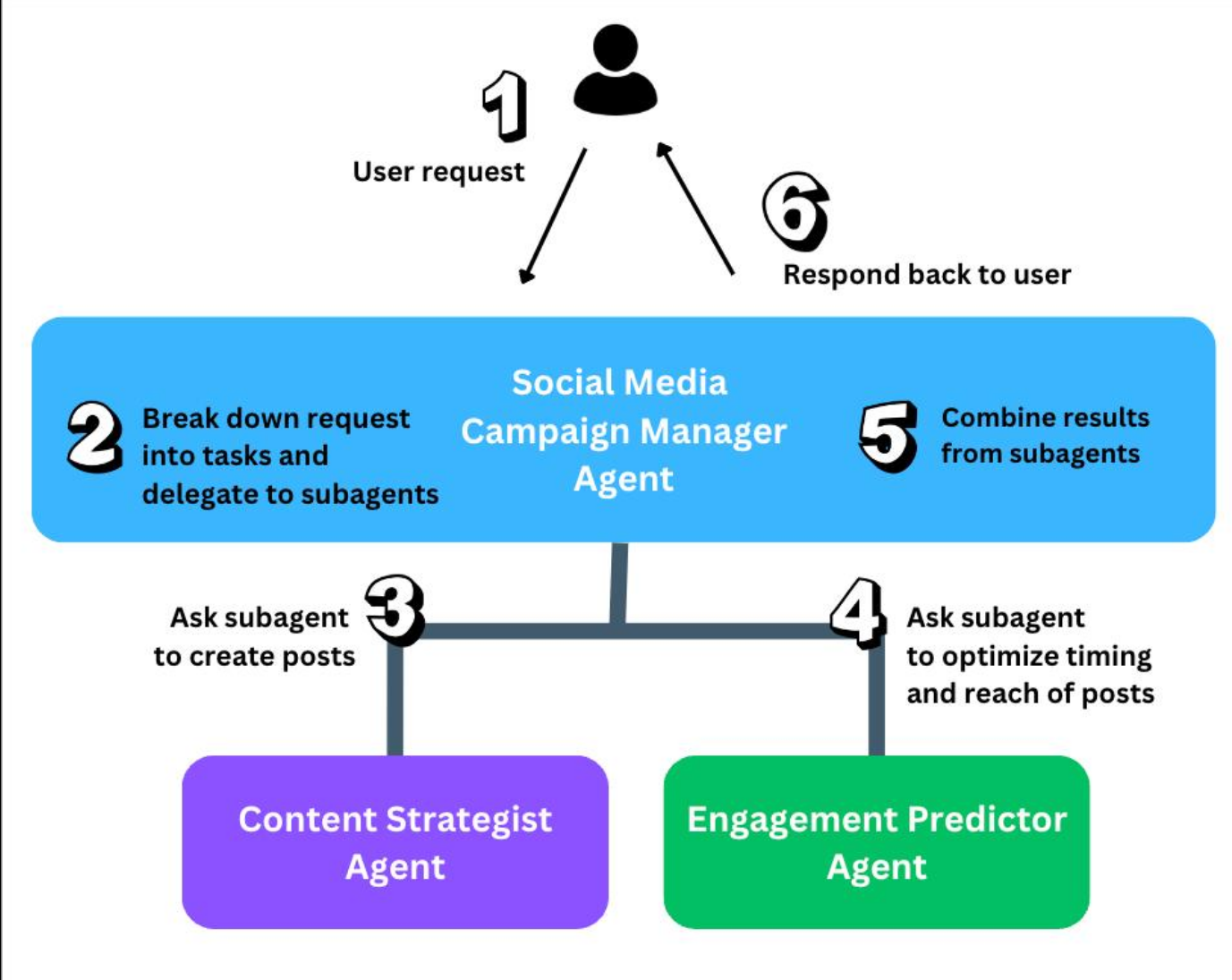
Customers usually speak in terms of the work immediately in front of them.
They might say:
“I need more accounts.”
“I need to post to 20 platforms.”
“I need hundreds of pieces of content.”
“I need to manage dozens of channels.”
“I need to monitor trends.”
“I need more engagement.”
“I need to do all of this faster.”
These are perfectly reasonable requests.
But individual requests don't always reveal the entire operational problem.
Consider an agency running a large social-media campaign.
The campaign may involve:
Accounts → identities → content → comments → timing → targeting → multiple platforms → monitoring → reporting
The customer might only ask for one piece of that chain.
But the real difficulty is coordinating the entire system.
That distinction matters.
Because the next generation of marketing software may not be about automating one more task.
It may be about coordinating the whole workflow.
The 100,000-comment question
Let's return to the original request.
“I need 100,000 comments.”
There are several possible ways to interpret it.
Perhaps the customer needs a large campaign.
Perhaps they manage many accounts.
Perhaps several people are working on the same operation.
Perhaps the campaign has multiple platforms, audiences, schedules and content variations.
The number itself is not necessarily the interesting part.
The interesting part is what happens around the number.
Who manages the accounts?
How is content prepared?
How is activity coordinated?
How are different platforms handled?
How is timing controlled?
How are results monitored?
How is the operation reported?
At small scale, people can manage these activities manually.
At larger scale, coordination becomes the problem.
And once coordination becomes the problem, the software opportunity changes.
From Tasks to Operations
For years, social-media software has generally been organized around individual functions.
A publishing tool helps publish.
An analytics tool helps analyze.
A content tool helps create content.
An account-management tool helps manage accounts.
An automation platform helps automate repetitive actions.
Each solves a useful problem.
But modern social-media operations are becoming increasingly interconnected.
A campaign might begin with a topic.
Then come content variations.
Then platform-specific publishing.
Then account activity.
Then audience interaction.
Then monitoring.
Then adjustments.
Then reporting.
The individual tasks are not isolated.
They form a workflow.
This creates a different question:
Instead of asking which task should software automate, what if software could coordinate the workflow itself?
That is a much bigger idea.
AI Changes the Unit of Work
Traditional automation is usually task-oriented.
You tell software:
Do this.
AI introduces the possibility of working at a higher level:
Achieve this objective.
That doesn't mean humans disappear from the process.
It means software can potentially take responsibility for coordinating more of the steps between an objective and its execution.
For example:
Traditional approach
Create post → schedule post → publish post → check results.
A more agentic approach
Campaign objective → understand content → adapt content → distribute across channels → monitor activity → identify changes → continue the workflow → report results.
The difference isn't simply “AI writes the post.”
The difference is the level at which the software operates.
The unit of work moves from:
One action
toward:
One workflow.
And eventually:
One business objective.
The Hidden Cost of Social Media Is Coordination
Creating one social-media post isn't particularly difficult.
Creating hundreds of posts is more difficult.
Creating hundreds of posts for multiple platforms, accounts, audiences and schedules is considerably more difficult.
But the real cost often isn't the individual action.
It is everything surrounding the action.
Someone has to decide:
Which account?
Which platform?
Which content?
Which variation?
Which audience?
Which timing?
Which campaign?
Which workflow?
What happened afterward?
As scale increases, coordination becomes a hidden operating cost.
That is why simply adding more people doesn't always solve the problem.
Sometimes it creates another problem:
more people to coordinate.
This Is Where Digital Employees Become Interesting
The idea of a digital employee is not simply about replacing a person clicking buttons.
It is about giving software a defined role inside a larger workflow.
Imagine a social-media operation with specialized digital workers:
Content Employee
Finds relevant ideas, creates variations and prepares platform-specific content.
Publishing Employee
Coordinates scheduled distribution across supported channels.
Monitoring Employee
Watches selected topics, keywords, hashtags, feeds and other information sources.
Engagement Employee
Handles defined engagement workflows according to the campaign's rules.
Reporting Employee
Collects activity and turns operational data into useful reports.
The important point is not any single employee.
It is the possibility of having them work as a system.
That is where the concept becomes more interesting than simply adding another automation button.
Customers Don't Always Ask for the Category
There is an important lesson here for marketers.
People can search for something they already understand.
They can search for:
social media scheduler
Instagram automation
YouTube management software
content repurposing
social media analytics
But what do they search for if they don't yet have a name for the solution?
This is where marketing becomes more than keyword capture.
SEO captures existing intent.
But new technology also requires education and category creation.
You sometimes have to show people a possibility before they know the vocabulary for searching for it.
Don't Just Answer the Existing Question
Imagine a customer searching:
“How can I manage 100 social-media accounts?”
One answer is to explain account management.
A more interesting marketing question might be:
Why should managing 100 accounts require 100 times more manual coordination?
That changes the conversation.
Another example:
A customer asks:
“How can I publish this content everywhere?”
The obvious answer is distribution.
But another question is:
Why are you creating and distributing every piece of content independently in the first place?
The first approach answers the customer's current question.
The second encourages the customer to rethink the workflow.
That is where marketing intelligence becomes valuable.
The Difference Between a Feature and a Product Idea
Consider these requests:
| Customer request | What it may reveal |
|---|---|
| “I need 100,000 comments.” | Large-scale campaign coordination |
| “I need 500 accounts.” | Account operations at scale |
| “I need to post everywhere.” | Cross-platform distribution |
| “I need different content for every platform.” | Content adaptation |
| “I need to know what's trending.” | Continuous market monitoring |
| “I need someone to manage all this.” | Workflow delegation |
A company focused only on features might build six different solutions.
A company looking for patterns might discover something else:
Customers increasingly need systems that coordinate complex social-media operations.
That is not one feature.
It is a product category.
The Question Every Growing Marketing Operation Eventually Faces
There is a point where adding another tool doesn't simplify the workflow.
It makes the workflow more complicated.
One tool for content.
Another for scheduling.
Another for analytics.
Another for account management.
Another for monitoring.
Another for reporting.
Another for AI.
Eventually the marketer becomes the person connecting all the tools together.
And that creates an interesting contradiction:
The software stack becomes more powerful while the human workflow becomes more complicated.
The next opportunity is therefore not necessarily another tool.
It may be the coordination layer between the tools and the people.
From Automation to an AI Operating Layer
This is one reason the conversation around AI agents is different from the conversation around traditional automation.
Automation asks:
What repetitive action can we eliminate?
AI agents can ask:
What sequence of actions can we coordinate toward an objective?
That distinction opens a much larger design space.
For social media, the progression might look like:
Manual work
↓
Task automation
↓
Multi-account automation
↓
Cross-platform workflows
↓
AI-assisted execution
↓
AI agents
↓
Digital employees
The technology is moving upward through the stack.
The interesting question is what happens when the software begins operating at the same level at which managers think about their work.
Managers don't normally think:
“Today I will execute 37 individual clicks.”
They think:
“We need to launch this campaign.”
That is the difference between actions and operations.
What JarveePro Is Building Toward
JarveePro has traditionally been associated with social-media automation and multi-account management.
But the larger opportunity is not simply doing the same things faster.
It is helping transform a collection of repetitive social-media tasks into a more coordinated operating system.
That is the thinking behind the direction toward AI-powered social-media agents and digital employees.
Instead of asking:
“Which button should I click next?”
the future question becomes:
“What should this digital worker accomplish for me?”
That is a fundamentally different interface between humans and software.
And it changes how we should think about social-media automation itself.
Listen to the Request. Then Look One Level Higher.
The next time a customer says:
“I need 100,000 comments.”
Don't stop at the number.
Ask what sits behind it.
Maybe the customer needs more accounts.
Maybe they need better content.
Maybe they need cross-platform distribution.
Maybe they need monitoring.
Maybe they need coordination.
Maybe they need an entire operational system.
The customer's request is still valuable.
But sometimes the request is only the visible tip of the problem.
The deeper opportunity is underneath.
The Future May Not Be More Automation
The obvious future of software is often described as:
more automation.
But there may be a more useful way to describe it:
more delegation.
Automation says:
“Software performs this task.”
Delegation says:
“Software takes responsibility for this workflow.”
That is a meaningful difference.
And as AI agents become more capable, the competitive question may increasingly become:
How much of the operational workload can a company delegate without losing human control over the strategy?
That is a much more interesting question than whether software can schedule another post.
The Best Customer Request May Be the One That Reveals a Bigger Problem
Customers don't need to arrive with the perfect product specification.
They shouldn't have to.
Their job is to explain what they are trying to accomplish.
The product company's job is to understand the operational reality behind that request and discover what technology can make possible.
So when a customer asks for:
100,000 comments
you can hear:
100,000 comments.
Or you can ask:
What kind of social-media operation requires 100,000 comments—and what would it take to coordinate the entire operation intelligently?
The first question is about a feature.
The second is about a market.
And sometimes, that is where the real product opportunity begins.