



The Quiet Google Maps Strategy Businesses Are Using in 2026
Introduction
Most people think winning on Google Maps is about one thing:
“Get more reviews.”
But that’s not what smart businesses are quietly focusing on anymore.
In 2026, local visibility became something much bigger than star ratings.
Businesses are now competing in what can best be described as:
local trust ecosystems.
And the interesting part?
Most small businesses can feel this shift happening…
…but they can’t fully explain it.
They notice competitors suddenly appearing everywhere:
- ranking higher on Maps
- getting more calls
- receiving more direction requests
- dominating local keywords
- looking more “established”
- appearing more trusted instantly
Meanwhile, their own listing feels invisible.
So they start quietly asking themselves questions like:
- “How are other businesses getting so visible?”
- “Why do some listings look more trusted?”
- “Why do certain businesses get reviews constantly?”
- “How do companies build local authority so fast?”
- “Why does Google seem to favor some listings?”
That’s where the real conversation starts.
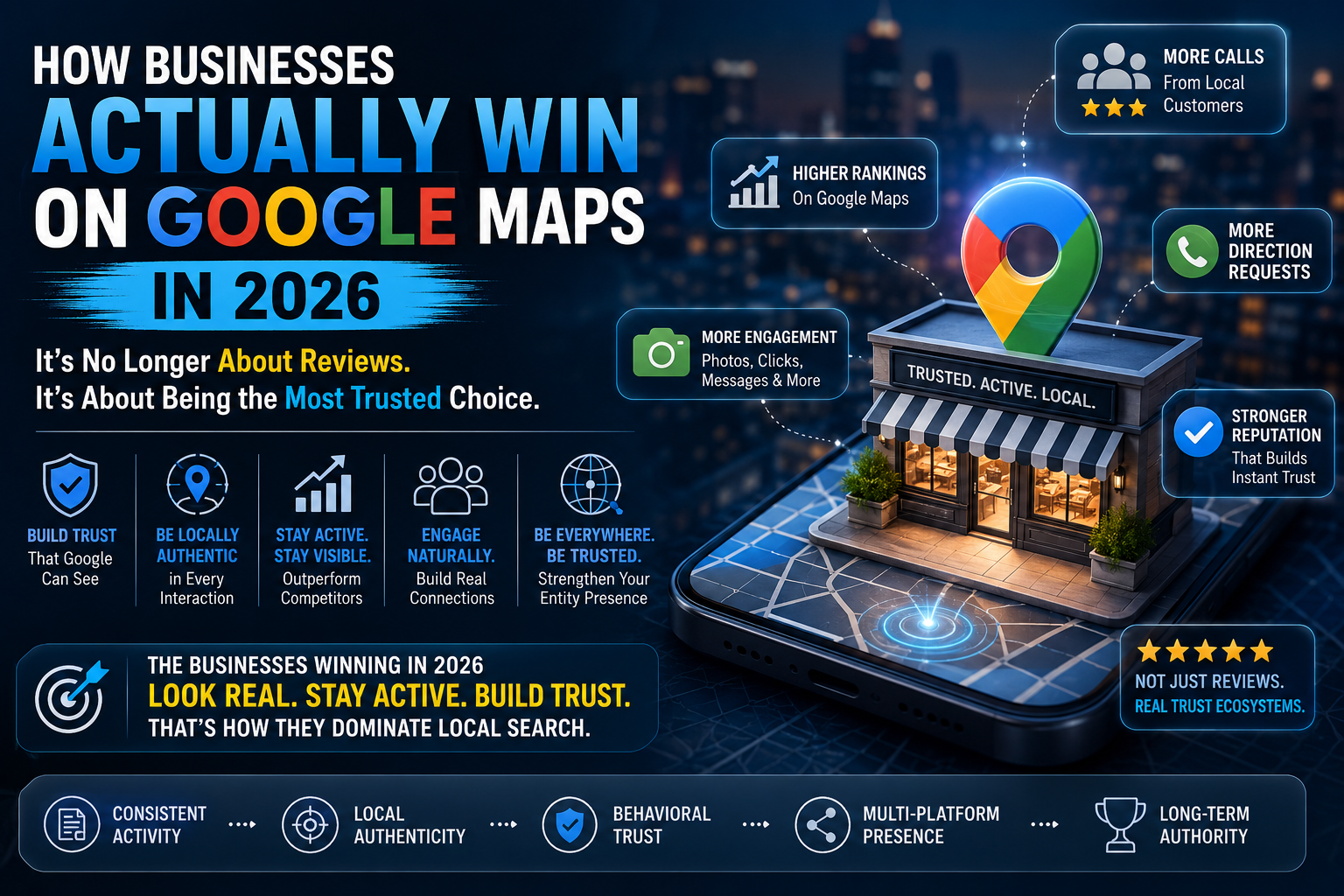
Google Maps Is No Longer Just a Directory
Years ago, Google Maps worked more like a business phonebook.
Today?
It behaves more like a reputation engine.
Google now evaluates:
- consistency
- activity
- trust signals
- engagement behavior
- local relevance
- listing freshness
- user interaction
- geographic authenticity
This means visibility is increasingly tied to perceived legitimacy.
Not just business existence.
The Biggest Thing Businesses Still Ignore
Most business owners obsess over reviews.
But many overlook something more important:
listing activity patterns.
A dormant listing with 200 reviews can still lose momentum.
Meanwhile, an active listing with:
- new photos
- updated business info
- customer interactions
- fresh engagement
- local behavioral signals
can outperform older competitors surprisingly fast.
Google increasingly rewards businesses that appear alive.
Why “Local Authenticity” Matters More Than Ever
One of the biggest quiet trends in 2026 is geographic consistency.
Businesses that look naturally connected to their service areas often perform better over time.
This includes signals like:
- local engagement
- nearby interactions
- regional browsing behavior
- map activity
- localized account history
- real customer movement patterns
That’s why businesses now pay much closer attention to:
- local content
- city-based engagement
- regional branding
- localized workflows
- geolocation consistency
The algorithm is becoming increasingly context-aware.
Reviews Alone Are No Longer Enough
This surprises many people.
Because businesses still believe:
“More reviews = better rankings.”
But in many industries, businesses with fewer reviews still outrank competitors.
Why?
Because Google appears to evaluate:
- review velocity
- account trust
- behavioral realism
- engagement diversity
- business activity consistency
A listing with natural-looking long-term engagement often appears stronger than sudden bursts of activity.
The Rise of “Digital Storefront Psychology”
Here’s something most marketers still don’t talk about:
People judge businesses emotionally before logically.
Before users even read reviews, they subconsciously evaluate:
- profile completeness
- business photos
- visual consistency
- posting activity
- professionalism
- branding quality
- responsiveness
- local familiarity
In many cases, businesses don’t lose customers because of bad ratings.
They lose customers because they look inactive.
Why Businesses Are Building “Entity Presence”
This is one of the biggest local SEO shifts happening quietly right now.
Businesses are no longer trying to exist in one place only.
They’re building:
- local mentions
- social signals
- branded searches
- directory consistency
- map interactions
- multi-platform visibility
Why?
Because Google increasingly trusts businesses that appear consistently across ecosystems.
A business that exists everywhere looks more real than one that exists only on a Maps listing.
The Smartest Local Businesses in 2026 Focus on These 7 Things
1. Consistent Local Branding
Matching visuals, descriptions, tone, and identity everywhere.
2. Stable Listing Activity
Frequent updates instead of random bursts.
3. Geographic Relevance
Localized engagement patterns matter more now.
4. Trustworthy Engagement
Natural interactions outperform artificial spikes.
5. Behavioral Consistency
Google increasingly tracks activity realism.
6. Multi-Platform Presence
Visibility outside Maps reinforces trust.
7. Long-Term Reputation Building
Sustainable authority now beats short-term tactics.
The Quiet Shift Nobody Talks About
The real game is no longer:
“How do I get more reviews?”
The real game is:
“How do I make my business look genuinely trusted everywhere?”
That’s a completely different strategy.
And honestly?
That’s why some businesses suddenly dominate local markets while others stay invisible despite offering great services.
Conclusion
In 2026, Google Maps became more than a navigation platform.
It became a trust-ranking ecosystem.
Businesses that understand:
- activity consistency
- local authenticity
- behavioral trust
- multi-platform presence
- long-term engagement
are quietly building massive advantages before most competitors even realize what changed.
The businesses winning local search today are not always the loudest.
They’re the ones that look the most believable.